

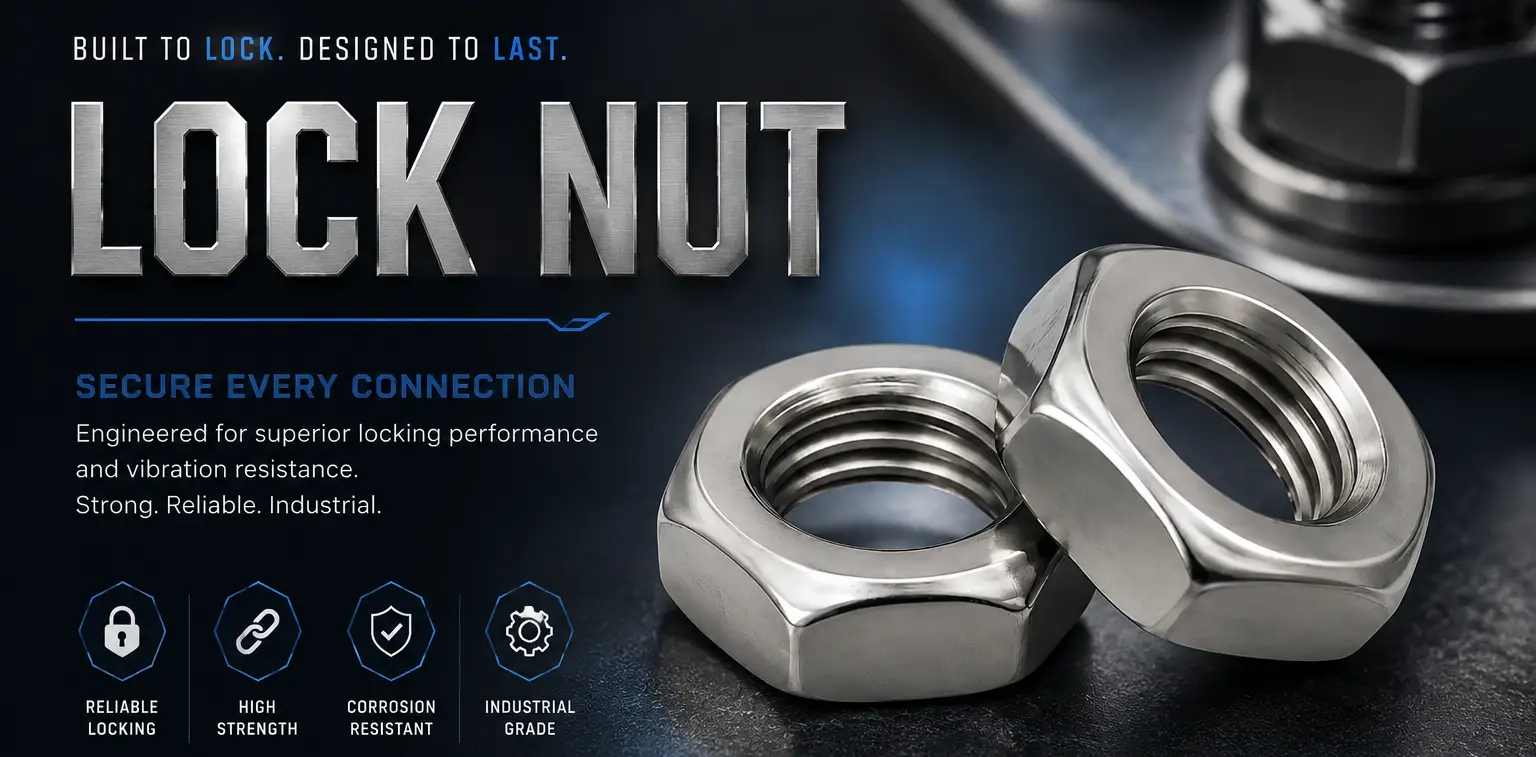
High-Performance Lock Nuts for Every Industrial Application
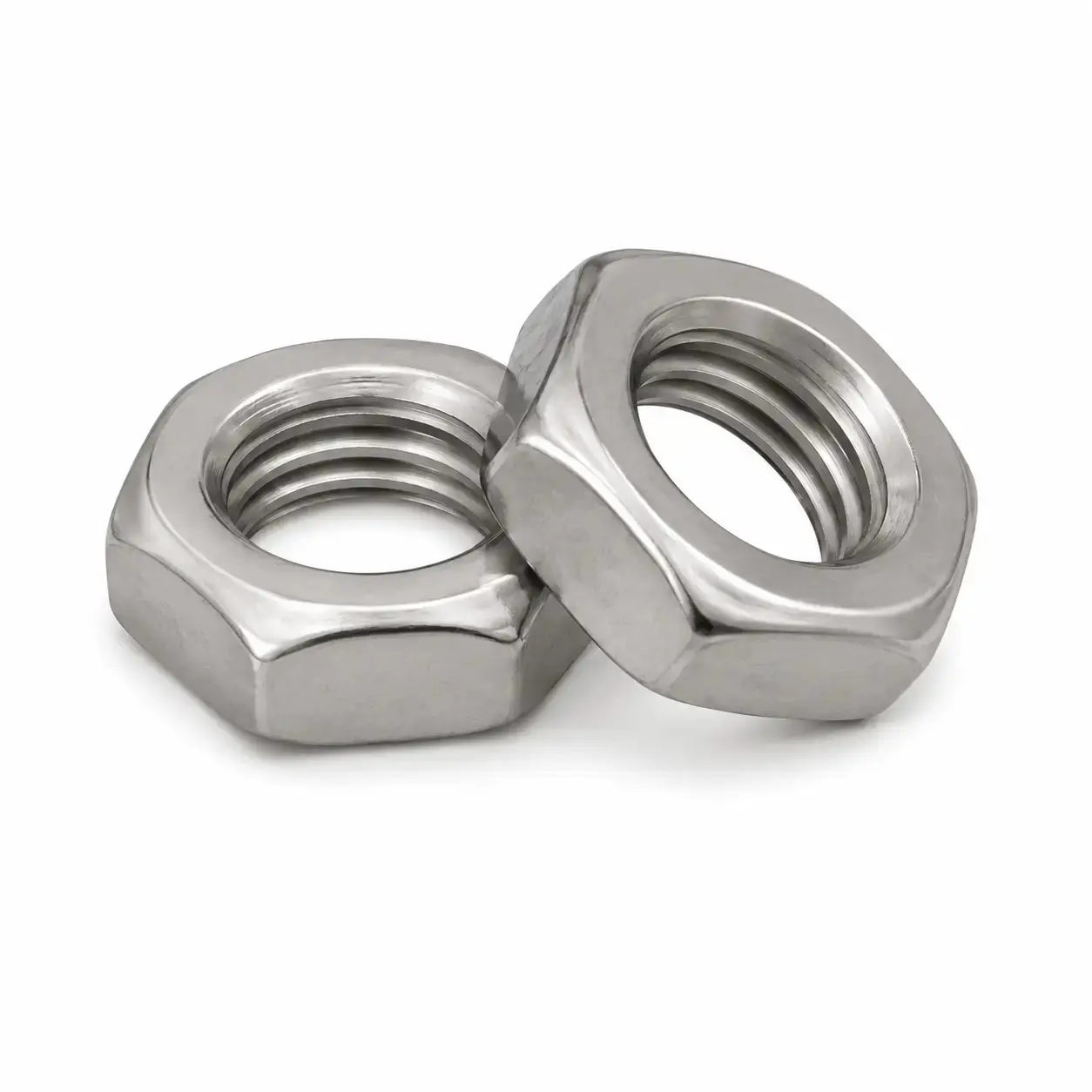
A Lock Nut Supplier in Ludhiana plays a vital role in delivering premium-quality fastening solutions for industries that require secure and vibration-resistant connections. Lock nuts are specially designed fasteners with an integrated locking mechanism that prevents loosening caused by vibration, shock, or continuous movement. Unlike standard nuts, lock nuts provide a firm grip on the bolt threads, ensuring maximum safety and long-lasting performance in demanding industrial applications.
As a trusted Lock Nut Supplier in Ludhiana, JVS Fasteners offers high-strength lock nuts manufactured from premium-grade raw materials and produced according to national and international quality standards. Our lock nuts are available in a variety of materials, including mild steel, stainless steel, and high-tensile steel, making them suitable for automotive, construction, heavy engineering, electrical, agricultural, and machinery industries. Every product undergoes strict quality testing to ensure superior durability, corrosion resistance, and dimensional accuracy.
Our lock nuts are designed to provide excellent resistance against loosening, making them ideal for applications exposed to continuous vibration and heavy loads. Whether you need standard sizes or customized specifications, our team is committed to delivering reliable fastening solutions at competitive prices. With advanced manufacturing technology, efficient inventory management, and timely delivery, we have earned a reputation as a dependable Lock Nut Supplier in Ludhiana for customers across India.
If you are looking for durable, precision-engineered, and cost-effective fastening products, choose JVS Fasteners—the leading Lock Nut Supplier in Ludhiana—for quality, reliability, and exceptional customer service. Our commitment to excellence ensures that every lock nut delivers outstanding performance, safety, and long service life in even the most challenging industrial environments.
- Vibration Proof: Won't loosen under heavy shaking.
- No Washers: Built-in mechanism eliminates loose parts.
- Constant Grip: Maintains firm, tight thread contact.
- Nylon or Metal: Available in insert or all-metal styles.
- High-Strength: Handles heavy-duty industrial loads easily.
- Fast Assembly: Fewer parts mean quicker installation.
- Rust Proof: Zinc or stainless options resist corrosion.
- Reusable: Can be removed and re-used reliably.
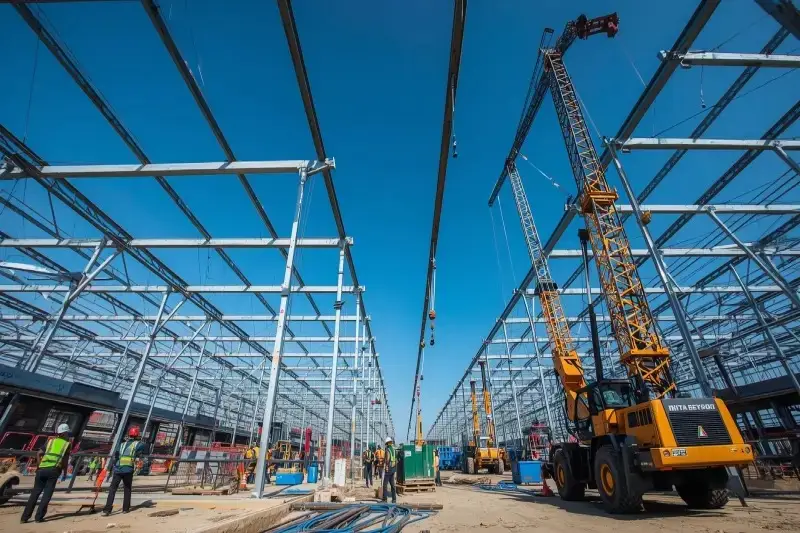
Industries & Applications

Why Choose Us as Your Lock Nut Supplier in Ludhiana?
Choosing the right Lock Nut Supplier in Ludhiana is essential for ensuring the safety, durability, and reliability of your fastening applications. At JVS Fasteners, we are committed to delivering premium-quality lock nuts that meet the highest industry standards. Our products are manufactured using advanced technology and high-grade raw materials to provide exceptional strength, precision, and long-lasting performance across various industrial sectors.
Premium Quality Products
As a trusted Lock Nut Supplier in Ludhiana, we manufacture lock nuts with superior dimensional accuracy, high tensile strength, and excellent resistance to vibration, corrosion, and wear. Every product is thoroughly inspected to ensure consistent quality and dependable performance.
Advanced Manufacturing Technology
Our modern production facility is equipped with advanced machinery and strict quality control processes. This enables us to manufacture lock nuts that comply with national and international standards while maintaining precision and durability.
Wide Range of Lock Nuts
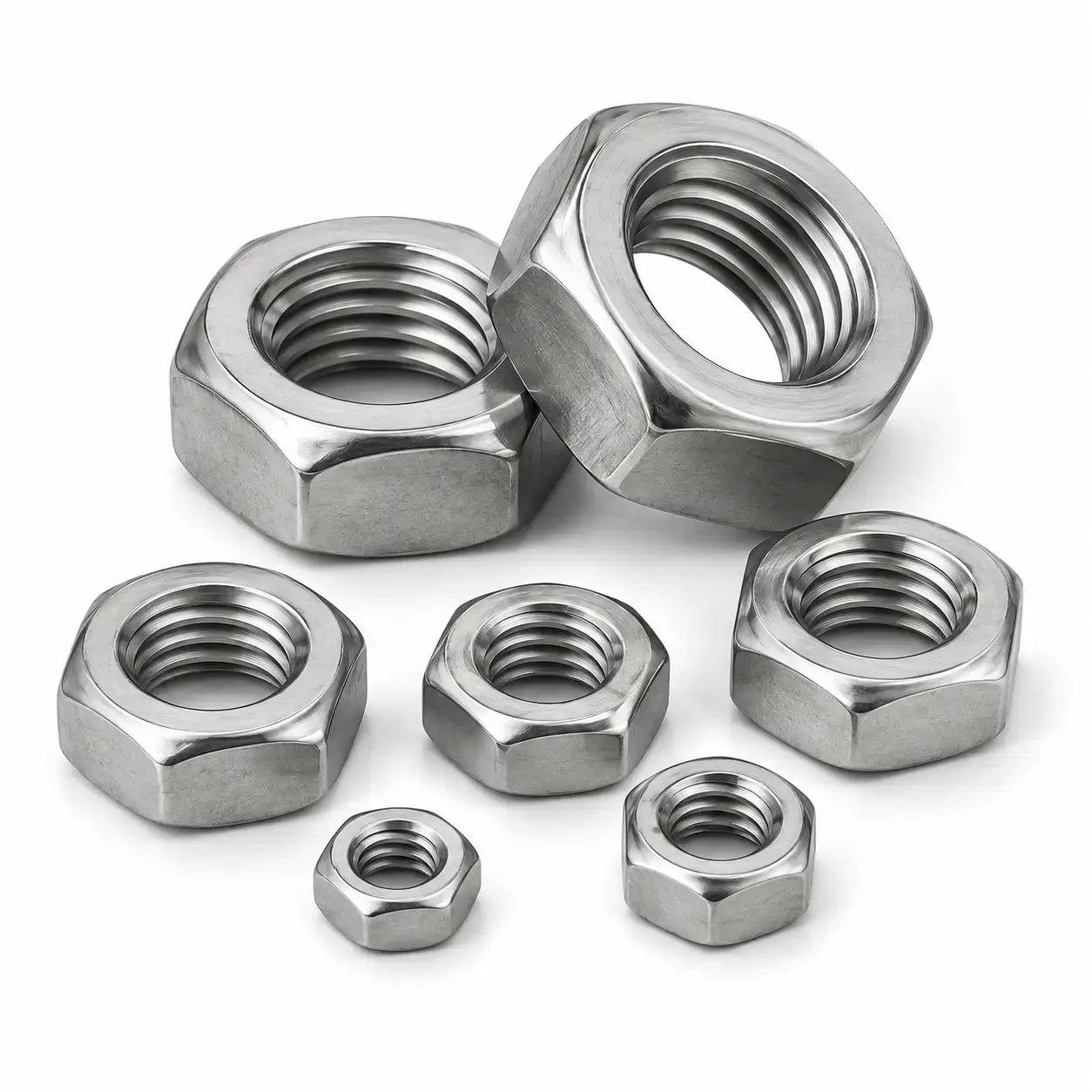
We offer a comprehensive range of lock nuts in various sizes, materials, and finishes to meet the diverse requirements of industries such as automotive, construction, engineering, heavy machinery, electrical, and infrastructure.
Competitive Pricing
Being an experienced Lock Nut Supplier in Ludhiana, we provide high-quality fastening solutions at competitive prices without compromising on product quality. Our cost-effective solutions help businesses maximize value and reduce operational costs.
Timely Delivery
We understand the importance of on-time supply for industrial projects. Our efficient inventory management and strong logistics network ensure prompt delivery of bulk and customized orders across India.
Customer-Centric Approach
Customer satisfaction is at the core of our business. Our experienced team provides personalized support, technical guidance, and customized fastening solutions to meet your specific project requirements.
Trusted by Industries Across India
With years of experience and a strong reputation for quality and reliability, JVS Fasteners has become a preferred Lock Nut Supplier in Ludhiana. Our commitment to excellence, precision manufacturing, and exceptional service makes us the ideal partner for all your industrial fastening needs.
Choose JVS Fasteners as your trusted Lock Nut Supplier in Ludhiana and experience premium-quality lock nuts, competitive pricing, reliable delivery, and outstanding customer support for every project.
Frequently asked questions
Standard hex nuts can easily back off and loosen when subjected to constant machine vibrations, rotational friction, or heavy movement. Lock nuts feature a built-in locking design that grips the bolt threads tightly, preventing accidental loosening and ensuring long-term assembly safety.
No, you do not. One of the main advantages of a lock nut is its integrated locking mechanism (like a nylon ring, thread distortion, or serrated base). This completely eliminates the need for separate spring or star lock washers, reducing your total component count and speeding up assembly time.
Yes, they can be removed and reinstalled, but it depends on the type. Nylon-insert nuts lose a bit of their gripping torque after a few uses as the nylon conforms to the threads. All-metal distorted thread lock nuts offer higher reusability and maintain their tight grip much longer in heavy-duty applications.
Absolutely. While nylon-insert lock nuts are limited by the melting point of plastic (usually up to 120°C), our all-metal lock nuts (such as Stover or top-lock styles) are specifically engineered to withstand extreme high-temperature industrial environments without losing their structural integrity or locking power.
We manufacture and supply them in high-tensile material classes (such as Class 8 and Class 10 / Grade 8) designed to handle intense industrial clamping loads. They are available with premium anti-corrosion finishes, including zinc-plated coatings and stainless steel, to prevent rust in tough outdoor or humid environments.